About the Course
How can we create a world of immense wealth and prosperity? A world where individuals are fully free to produce and trade, and to pursue happiness as they see fit? A world unrestricted by the chains of authoritarianism and dictatorship? In short: a world of human flourishing?
By advancing capitalism.
And the best way to do that is by understanding exactly what capitalism is, which ideas support it, and which ones undermine it.
In this course, Eric Daniels, assistant director of the Clemson Institute for the Study of Capitalism, will present key ideas and arguments of the best pro-capitalist thinkers—illuminating their strengths and weaknesses, and showing how you can employ the most effective principles to make a compelling case for free minds and free markets.
You’ll learn:
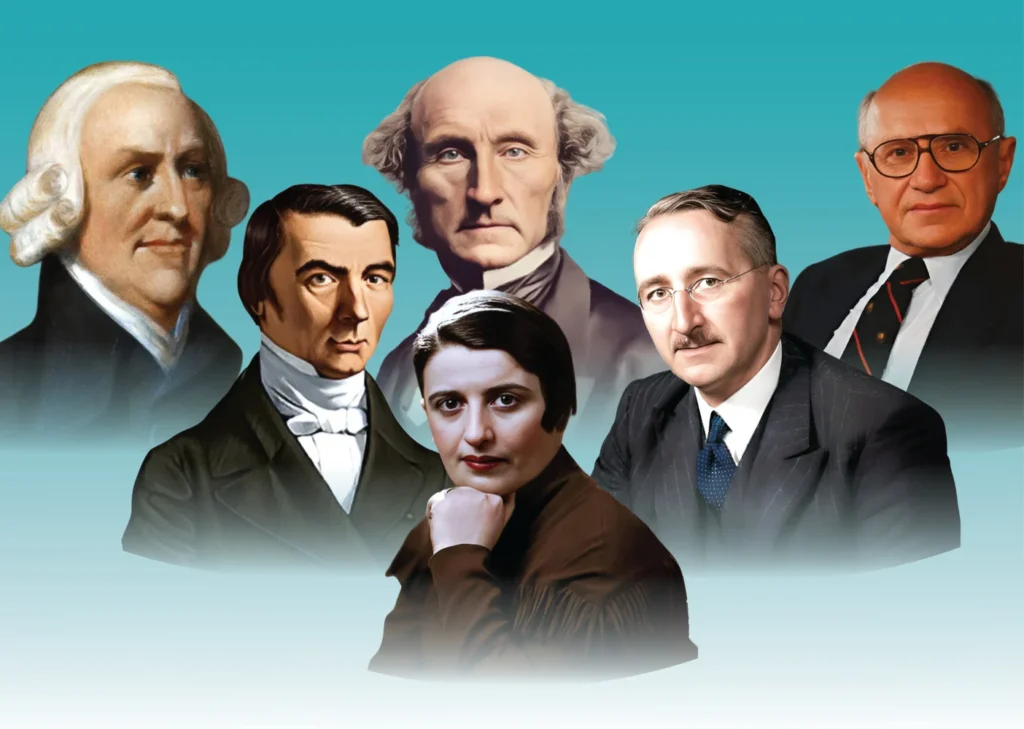
- Adam Smith’s revolutionary views on free markets, individual liberty, and the role of government
- Frédéric Bastiat’s defense of free society as well as his groundbreaking ideas on unintended consequences, the harmony of men’s interests, and the nature of justice
- John Stuart Mill’s case for liberty, including his popular but dangerously vague “harm principle” and his view of how society can best protect liberty.
- F. A. Hayek’s theories of spontaneous order and cultural evolution, how these can help us understand and improve social harmony, and how he defines coercion and argues against it
- Milton Friedman’s arguments for political and economic freedom, his utilitarian conception of value, and his theory of government
- Ayn Rand’s grounding of capitalism in ethics and reason, and how she conceives of and integrates moral and economic value.
Come deepen and refine your understanding of capitalism, become a more powerful advocate of freedom, and fight more effectively for a future of flourishing.

How This Course Works
This course is interactive and discussion-driven, so enrollment is limited. Register early to secure your spot.
The course is held live on a video conferencing app called Zoom, which you can download for free here. Sessions are video recorded, so if you miss a session (or want to review), you can watch the recording.
The course is 9 hours long, consisting of 6 sessions of 1.5 hours each.
Suggested readings are delivered via email. Course participants are invited to an exclusive OSI Courses group on Facebook, where they can post questions and engage in discussions with the instructor and other participants.
Have a question that wasn’t answered here? Read our FAQ or email us at [email protected].
Frequently Asked Questions
OSI courses are live, interactive, and discussion-driven, so enrollment is limited. Register early to secure your spot.
Courses are held on Zoom, and sessions are recorded, so if you miss a session (or want to review), you can watch the recording. You can download Zoom for free here.
Courses vary in length. And some involve homework. Please see the specific course pages for details.
Course handouts and supplementary materials are delivered via email (please register with an active email address). Participants have access to an exclusive OSI Courses group on Facebook.
Zoom is a free video-conferencing app that we use to conduct our courses. You can download it here.
Sessions are video recorded, so if you miss a session (or want to review), you can watch the recording. That said, we highly recommend attending each live session so that you can ask questions and engage with your instructor(s) and other participants.
If you do miss a session, we recommend that you watch the recording before attending the next session.
Anyone aged 29 or younger may apply for an OSI scholarship to cover the full cost of a course. For information on how the scholarships work, please visit our Scholarships page.
You can see all current and past courses here.
If you have a question that isn’t answered in the FAQ or course description, please email us at [email protected].