About the Course
What is the nature of the world in which we live? Is it governed by natural law? Or divine law? Is it a causal environment? Are miracles possible? How can we know what is true and false, good and bad, or how people should and shouldn’t act? What principles should govern human relationships, societies, and governments?
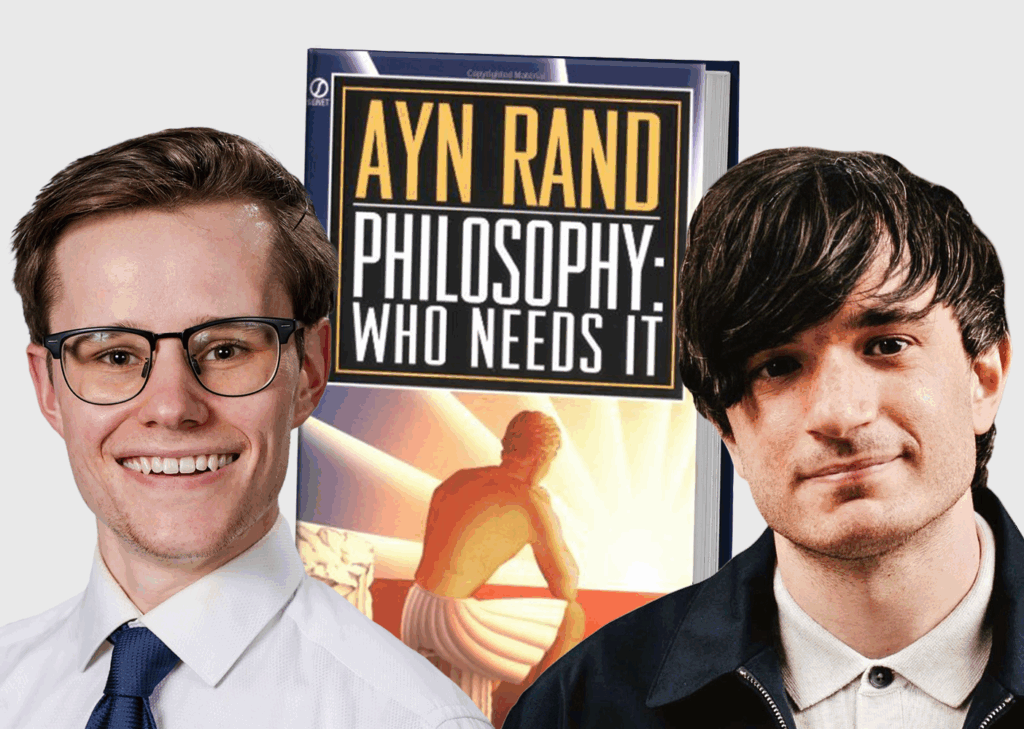
In Philosophy: Who Needs It, Rand argues that everyone has ideas regarding such crucial questions, that this body of ideas is an individual’s philosophy, and that he or she refers to this philosophy, implicitly or explicitly, when making choices and taking actions. An individual’s philosophy, therefore, affects his or her thoughts, emotions, and decisions throughout life. Philosophy, in a word, is inescapable. Our choice is not whether to have one, but whether to develop our philosophy rationally, through conscious deliberation—or to accept one by default, through social osmosis.
Rand advises that we think through such pivotal ideas and determine for ourselves what makes sense and what does not. This, she emphasizes, is the only way we can ensure that our ideas are connected to reality and thus useful for living in reality.
Topics for discussion include:
- The major branches of philosophy and their practical significance in our lives;
- How to assess ideas for connection to reality;
- What is and is not within our power to change;
- Free will and whether it is real or an illusion;
- Our senses and whether they provide accurate information about reality;
- Reason vs. faith and the consequences of embracing one or the other—or attempting to embrace both;
- Life-serving, achievement-oriented morality vs. sacrificial, duty-oriented morality;
- Free-speech, censorship, and where the relevant lines are properly drawn;
- Egalitarianism, inflation, and the connections between them;
- How to live a thoughtful, examined, purposeful life; and
- How to advance the ideas on which human life, liberty, and happiness depend.
Meet Your Instructors


Frequently Asked Questions
OSI courses are live, interactive, and discussion-driven, so enrollment is limited. Register early to secure your spot.
Courses are held on Zoom, and sessions are recorded, so if you miss a session (or want to review), you can watch the recording. You can download Zoom for free here.
Courses vary in length. And some involve homework. Please see the specific course pages for details.
Course handouts and supplementary materials are delivered via email (please register with an active email address). Participants have access to an exclusive OSI Courses group on Facebook.
Zoom is a free video-conferencing app that we use to conduct our courses. You can download it here.
Sessions are video recorded, so if you miss a session (or want to review), you can watch the recording. That said, we highly recommend attending each live session so that you can ask questions and engage with your instructor(s) and other participants.
If you do miss a session, we recommend that you watch the recording before attending the next session.
Anyone aged 29 or younger may apply for an OSI scholarship to cover the full cost of a course. For information on how the scholarships work, please visit our Scholarships page.
You can see all current and past courses here.
If you have a question that isn’t answered in the FAQ or course description, please email us at [email protected].